
How to Jump Higher
The four qualities that actually raise a vertical — and why most jump programs stall.
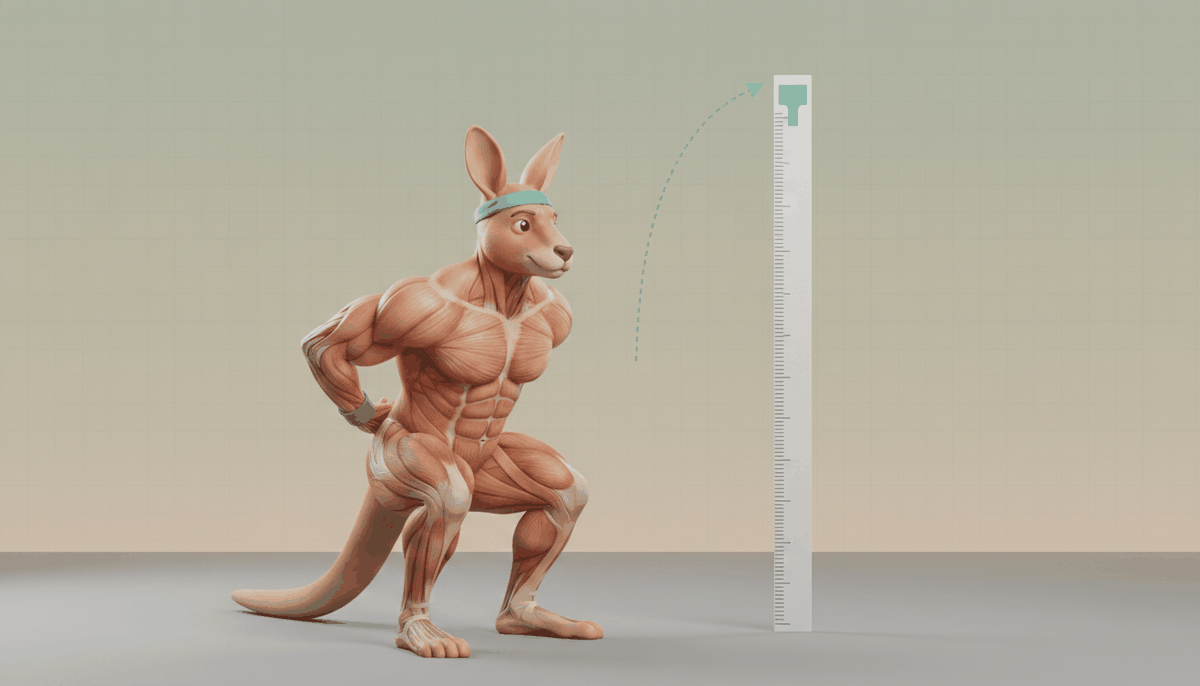
Jumping higher comes down to one thing: producing more force against the ground in the split second your foot is in contact with it. A vertical jump lasts roughly two-tenths of a second on the way up, so it is not just how strong you are — it is how much force you can deliver, and how fast. Train the right qualities in the right order and your vertical climbs. Chase random workouts and it stalls.
What actually increases your vertical
Three trainable qualities sit underneath every vertical jump:
- Strength — the foundation. You cannot deliver force you have not built. A solid base of lower-body and single-leg strength is what everything else multiplies. Skip it and your ceiling stays low.
- Rate of force development (RFD) — how fast you apply it. Because ground contact is so brief, maximum strength is never fully expressed in a jump. The winning quality is how quickly you can ramp force up in that narrow window — which is why pure max-strength training eventually plateaus for jumpers.
- Plyometric / reactive ability — free energy. Your muscles and tendons store elastic energy during the quick dip before takeoff (the stretch-shortening cycle) and return it on the way up. Plyometric training teaches your nervous system to use that spring — the difference between a heavy, slow jump and a light, explosive one.
Why random workouts stall
Doing a pile of jumps or maxing out in the gym every week feels productive, but it ignores how these qualities build. Strength has to come first, plyometric intensity has to ramp gradually, and the whole thing has to progress and be re-tested — otherwise you plateau or pick up nagging injuries. A structured program sequences the work so each block sets up the next.
The realistic path and timeline
Expect first gains in the 6–10 week range and meaningful gains over a few months, not days. The fastest, safest route is a periodized program: build a strength base, layer in controlled plyometrics, then sharpen reactive and explosive power — retesting along the way so the plan adjusts to what your body is actually doing.
Common myths
- "It's all genetics." Genetics set a range; almost everyone has room to move within it with the right training.
- "Lifting makes you slow." Done correctly, strength work makes you more explosive, not less. Problems come from lifting too heavy, too close to competition, or neglecting speed and plyometric work.
- "Just do more jumps." Volume without a strength base and without progression leads to sore knees, not a higher vertical.
Train safely
Plyometrics are high-impact. Progress intensity gradually, respect recovery, and back off when your legs feel flat or a joint aches — quality reps beat junk volume every time. Consult a professional before starting any program if you have an injury or medical concern.
Frequently asked questions
How long does it take to jump higher?
Most athletes see the first inches within 6–10 weeks of consistent, structured training, with larger gains over several months. Your starting strength, training age, and how well you recover all shape the timeline — there is no overnight fix.
Do I need a gym to increase my vertical?
No. A strength base helps, but a lot of vertical-jump progress comes from bodyweight plyometrics, single-leg work, and technique — all trainable at home. Access to weights lets you build the strength foundation faster.
Should I do squats or plyometrics to jump higher?
Both. Strength is the foundation and plyometrics teach your body to use that strength fast. Doing only one stalls: heavy lifting without plyometrics leaves you strong but slow, and jumping without a strength base plateaus quickly.
How often should I train my vertical?
Two to four focused sessions per week is plenty for most people. Explosive and plyometric work is neurally demanding, so quality and recovery matter more than volume — more is not better once form or bounce degrades.
Put it into a program
VertiRoo turns all of this into a personalized, adaptive plan: it tests your vertical, builds a phase-by-phase program of strength and plyometrics, and re-tests to keep it matched to your progress. Next, read how a real vertical jump training program is built.